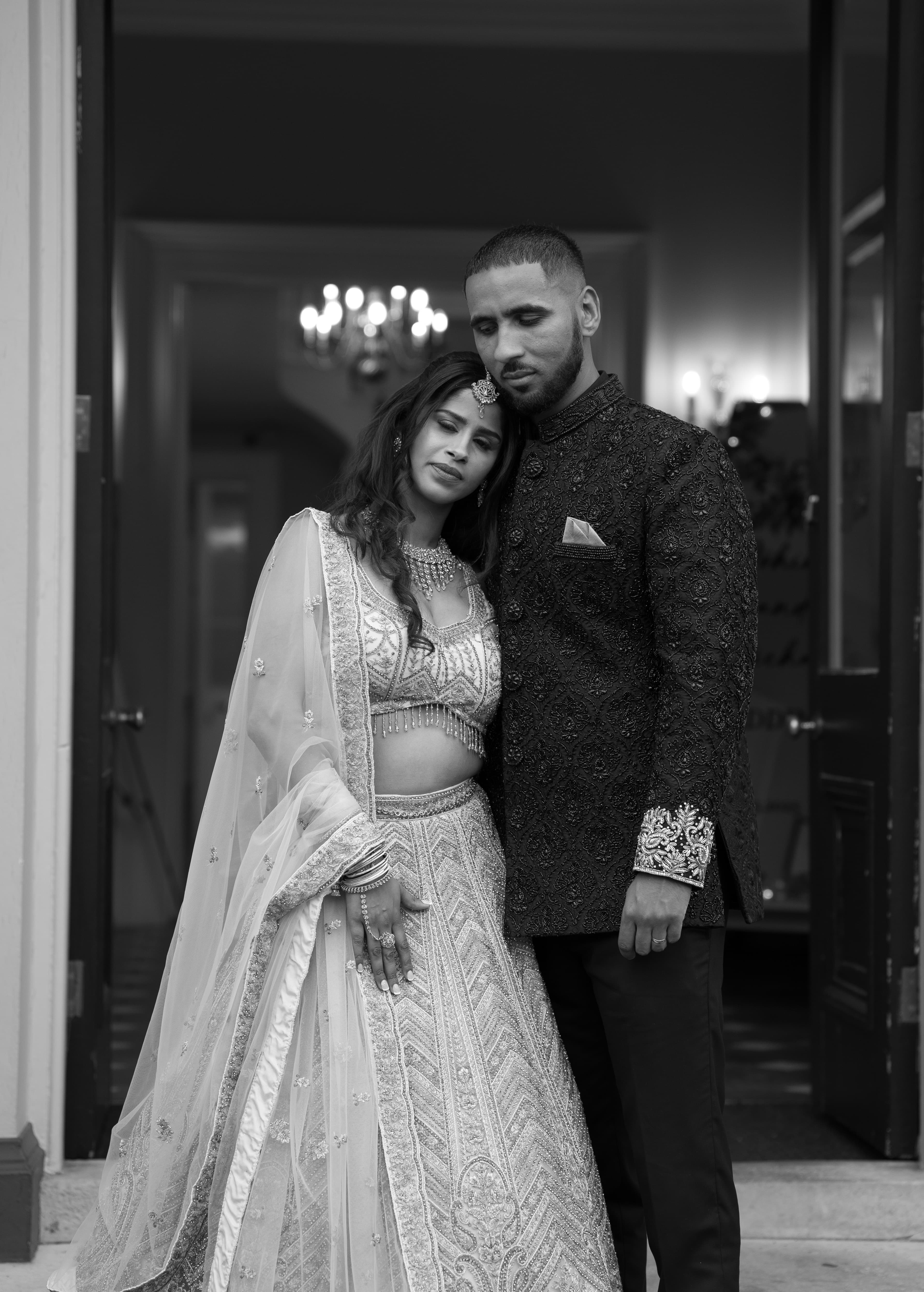
You do not need to become confident in front of a camera before your wedding. Start by telling your photographer and filmmaker what feels uncomfortable, agree how much direction you want and choose a short portrait session somewhere you can settle. You can have photographs and a film without turning the celebration into a performance.
Being photographed, being filmed and being watched by guests can feel quite different. Work out which part worries you most: that gives your team something useful to plan around, rather than leaving you with the unhelpful instruction to “just relax”.
What should you tell your photographer and filmmaker?
Be specific about the situation, not critical of your appearance. “I freeze when someone asks me to smile” suggests a different approach from “I feel fine with the camera until other people start watching”. You do not need to explain personal history or share anything you would rather keep private.
- Direction: would you prefer one clear suggestion at a time, or mostly to be left to interact?
- Space: would a quiet corner feel easier than portraits in front of the wedding party?
- Touch and movement: mention any movements, clothing adjustments or close-up photographs you would rather avoid.
- Priorities: name a few photographs you genuinely want, such as one relaxed portrait together and a picture with each family.
- A pause: agree a simple way to say you need a moment, without making it an announcement.
If you have photography and film, share the same brief with both. Ask who will lead the portrait session so you are not receiving competing instructions. Our Photo + Video approach is built around a shared timeline and priorities; the specific plan should still fit your comfort level.
Does natural photography mean no guidance at all?
Not necessarily. Documentary coverage records events as they unfold, while gentle direction might mean moving towards softer light, turning slightly or finding somewhere less busy. That is different from being asked to hold a complicated pose or recreate an emotional moment.
Ask a prospective photographer to describe what they would actually say during portraits. An example instruction is more useful than a style label. Look through a complete wedding gallery as well as selected portfolio photographs: notice whether you like the quieter expressions, family pictures and indoor moments, not only the dramatic portraits.
What can you do instead of posing?
Choose something simple that already feels comfortable together. You might walk a short distance, sit side by side or talk about something that happened that morning. Treat these as options, not a routine you must rehearse. Standing still can work too; movement is not a requirement.
Keep the action small and give it time. If you are walking, there is no need to stride towards the camera or look over your shoulder on cue. If holding hands feels natural, do that; if it does not, say so. The photographer can help with light and composition while you concentrate on each other.
You also do not have to laugh, kiss or look intensely romantic because a camera is present. A quiet expression is not a failed photograph. Avoid collecting a long pose checklist that makes you monitor your hands, face and posture all at once.
Will wedding film make us feel more on show?
Film records movement and sound, but that does not mean you need to act or speak to the lens. Ask which parts of the day will be observed and which may involve direction. If you do not want an interview, staged letter reading or repeated entrance, discuss that before agreeing the coverage.
For a short portrait sequence, one easy action can give the filmmaker time to record the movement while the photographer makes still images. Ask the team to explain when to keep going and when they have finished, rather than guessing whether you should stop and smile.
Sound is worth discussing separately. Ask how microphones will be fitted, when they will be used and who to speak to if you need a private break. These are practical questions for your filmmaker, not something you need to solve on the day. Explore our wedding films and videography approach to decide what kind of storytelling you respond to.
Where should a camera-shy couple have portraits?
Choose comfort before a famous backdrop. For a London wedding, a busy pavement or landmark may feel very different from a sheltered part of your venue. Ask about an accessible, quieter option and an indoor alternative. A nearby place that lets you settle may suit you better than adding another journey.
Check practical details such as steps, footwear, seating and who else may use the space. Do not assume a courtyard or room will be private; confirm access with the venue. If one partner enjoys attention and the other does not, agree the quieter option first rather than deciding in front of guests.
Keep a defined window for portraits and tell the team when you want to return to the reception. The right allowance depends on the photographs, film and locations you choose. Our wedding photography and video timeline guide explains how to fit that window around the day without filling every spare minute.
Do you need a pre-wedding shoot to feel comfortable?
No. An optional session can help you experience how a photographer gives direction, but it is not a test you must pass before getting married. If you are considering one, ask about its purpose, location, duration and what is included in your agreed booking.
A conversation can be useful on its own. Describe what you liked or disliked about being photographed before, ask how the team would handle it and agree a manageable plan. You do not need to practise smiling in a mirror or change how you look to deserve photographs you value.
A short brief you can send before the wedding
Adapt this example rather than treating it as a required shot list: “We would like mostly natural coverage and a few portraits together. We feel awkward when guests watch, so could we find a quieter spot? Please give us one suggestion at a time and let us know when you have what you need. We would rather not repeat emotional moments for the camera.”
Add any important family photographs and practical needs, then leave room for the celebration to happen. The aim is not to erase every nervous feeling; it is to make sure your team understands how to work with you.
Planning a wedding in London or elsewhere in the UK? Check Your Date and tell us your venue, whether you are considering photography, film or both, and what would help you feel at ease. That is a useful starting point for a conversation about your day.