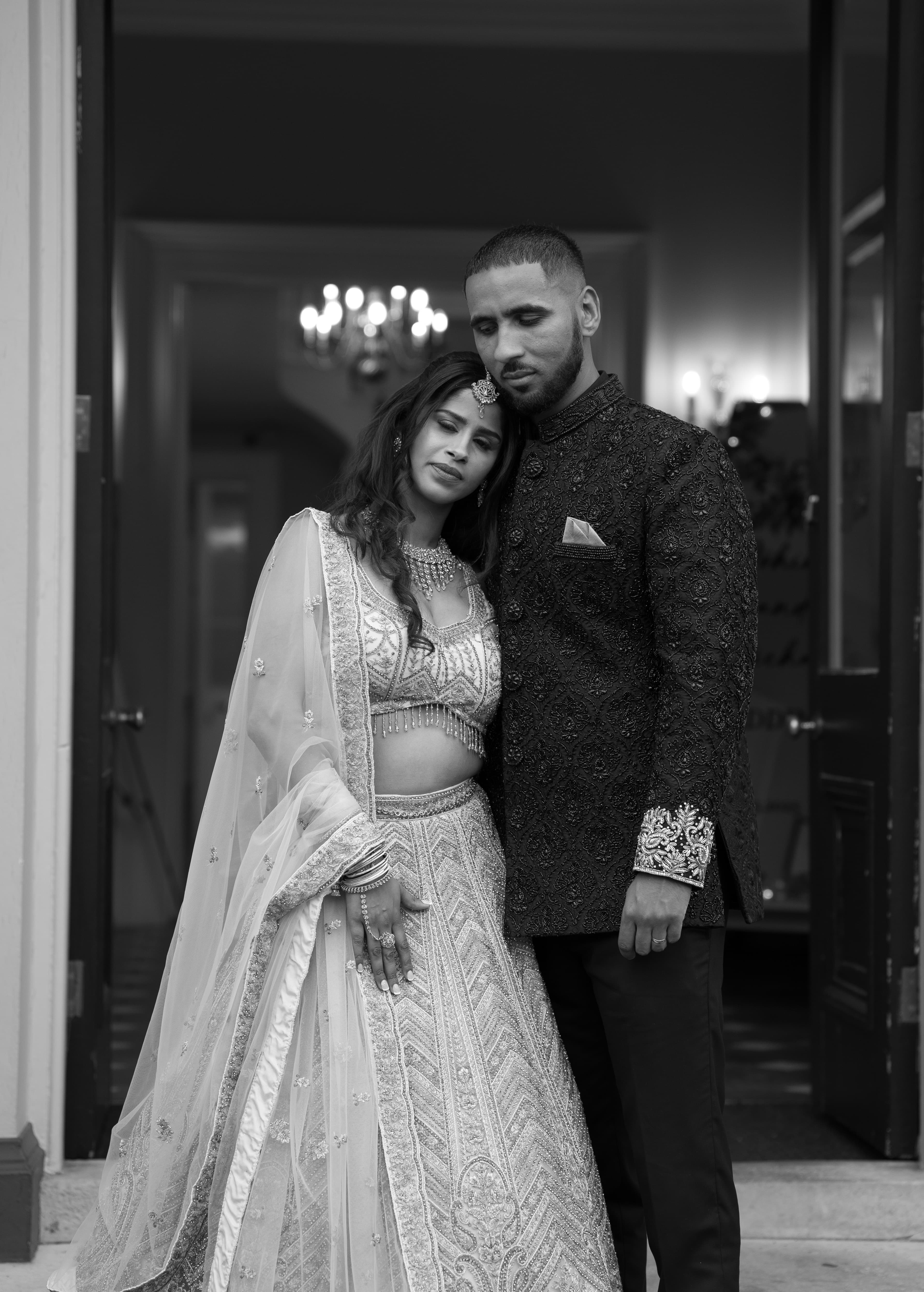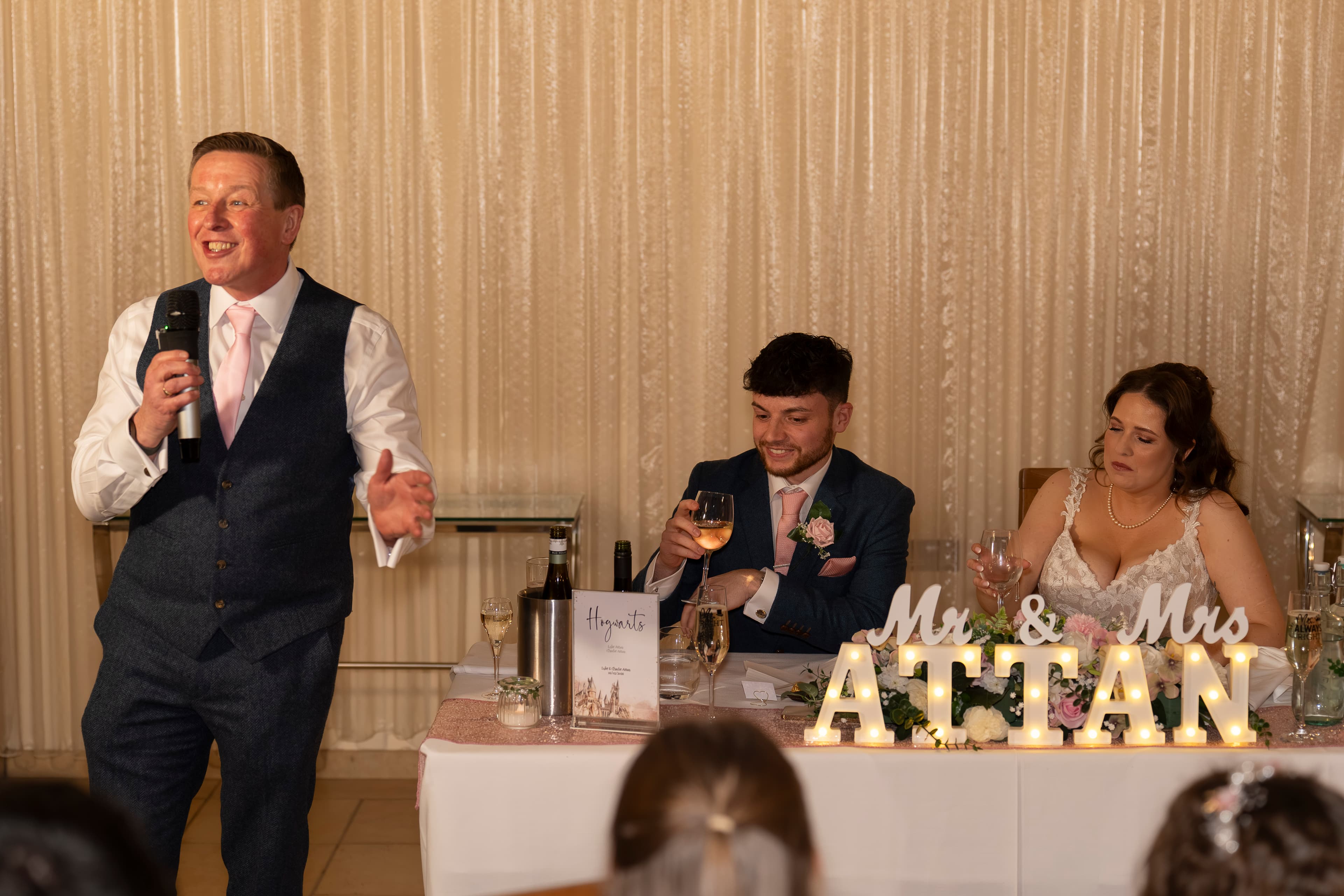
A wedding highlight film is a selective, story-led edit of the day. A full ceremony or speeches film preserves those events in much more detail, usually in their running order. If the atmosphere matters to you but you also want to hear complete vows, readings and speeches years later, ask for both types of film rather than assuming one includes the other.
The names are not standard across the industry. One filmmaker’s “highlight” may be another’s “cinematic film”, and “full film” does not always mean every second is included. Compare the actual deliverables, approximate running times and editing approach in writing before you book.
What is a wedding highlight film?
A highlight film condenses the wedding into a shorter story. It might move between preparations, the ceremony, portraits, the reception and the dance floor instead of showing each part from beginning to end. Music, natural sound and selected lines from vows or speeches can connect those scenes.
Its strength is feeling: you can revisit the movement, voices and atmosphere without watching the whole day in real time. It is often the edit couples choose when they want to show friends and family an overview. That selectivity is also its limitation. A highlight cannot contain every reading, every speech or every exchange from a longer ceremony.
A short trailer and a longer cinematic story are not necessarily the same deliverable. Ask whether both are included, how they differ and whether the trailer is a separate edit or a shorter version of the same sequence. You can browse our wedding films to see whether the pacing, sound and balance of moments suit you.
What are full ceremony and speeches films?
These are longer edits designed to preserve a particular event. A full ceremony film should make it possible to follow the ceremony as it happened, including the parts agreed for coverage. A full speeches film should let you hear the complete set of recorded speeches, not only the lines selected for the cinematic story.
They may still be edited. A filmmaker can switch between camera angles, balance sound, correct colour and remove unusable gaps while keeping the event coherent. That is different from raw footage, which is the unedited material recorded by the cameras and audio devices. If raw footage matters to you, ask about it separately; do not assume that “full ceremony” means every original file.
Before booking, clarify where each full film begins and ends. For a ceremony, that might mean the entrance through to the exit, but the precise answer depends on the ceremony and the agreed coverage. For speeches, confirm whether introductions, gifts, pauses and audience reactions remain in the edit.
Which film will we value most?
They serve different memories. A highlight film helps you return to the shape and emotion of the whole day. Full ceremony and speeches films protect the words and sequences that a shorter edit cannot hold. One is not automatically a better or more premium version of the other.
Think about what you would regret not hearing again. If you are writing personal vows, including meaningful readings or inviting several people to speak, the longer films may be especially important. If your priority is a concise story with movement, music and glimpses from across the day, the cinematic edit may be the film you revisit most often.
You do not need to predict exactly how you will watch the films in ten years. Make a simple priority list: complete words, overall atmosphere, easy sharing and the people whose reactions matter to you. Then ask the filmmaker which deliverable protects each priority.
Do we need a highlight film and full films?
You may want both when you value the creative story and the complete spoken moments. The combination gives the filmmaker freedom to keep the highlight purposeful without forcing every important reading or speech into a short running time.
Full films can matter when a guest cannot attend, but check how private delivery and sharing work before promising access. Music licences, platform rules and the couple’s own privacy choices may affect what can be posted publicly. A private gallery or download is not the same as permission to publish.
If you are comparing packages, do not judge only by the number of films. Ask what each film contains and whether the sound is captured clearly. A long edit with weak audio may preserve less of the experience than a carefully planned shorter film plus complete, well-recorded ceremony and speeches edits.
What should we ask a wedding videographer before booking?
Use the supplier’s exact wording and ask for the answer in the proposal or agreement. These questions make similar-sounding packages easier to compare:
- Which films are included, and is the short trailer separate from the longer cinematic edit?
- What is the approximate running time of each film, and is that a guide or a guaranteed length?
- Does “full ceremony” include entrances, readings, vows, signing and the exit where those moments form part of our ceremony?
- Does “full speeches” include every planned speaker and the introductions between them?
- How will vows and speeches be recorded, and is there independent audio as well as sound from the venue system?
- How many cameras and operators will cover the ceremony and speeches, and when might the plan change?
- How are the finished films delivered, and what options are available for private sharing?
- Is raw footage included, available separately or not supplied, and how long are original files retained?
These questions complement our broader guide to questions to ask a wedding videographer, which also covers attendance, coverage hours, music, delivery and working alongside your photographer.
How should the timeline protect the ceremony, speeches and sound?
Tell the filmmaker when the ceremony and speeches are expected to start, who will speak and whether the day moves between rooms or addresses. Share changes as soon as they are known. A few minutes of notice can matter when cameras and audio need to be repositioned before an unrepeatable moment.
Ask the venue or celebrant where cameras may stand and whether microphones are restricted. A feed from a venue sound system can be useful, but couples should still ask their filmmaker how audio will be recorded and backed up. The final plan belongs with the professionals involved; you should not have to manage recording equipment on the day.
If photography and video are provided by separate suppliers, introduce them before the wedding and share one schedule. If you prefer one coordinated team, our Photo + Video service uses a shared plan. Either route can work when responsibilities, positions and priorities are clear. Our wedding photography and video timeline guide explains how to protect key moments without making the celebration feel like a production.
What does Miftah Photography’s videography coverage include?
The current full-day wedding videography service lists a short highlight trailer, a 12–15 minute cinematic storytelling film, full ceremony and speeches films with audio, professional audio capture and multi-camera coverage for key moments. Those are separate deliverables with different purposes: the cinematic films tell the wider story, while the full films preserve the longer spoken events.
Your proposal and agreement should remain the source of truth for your own booking. Tell us if your ceremony has several readings, if speeches will happen in more than one part of the day or if complete spoken moments are a priority, so the coverage can be discussed before the date is secured.
Planning a wedding in London or elsewhere in the UK? Check Your Date and tell us where the wedding is taking place, which films matter most and whether you are considering videography or a coordinated photo-and-video team. We can then discuss the coverage you actually want.