Clear vows and speeches begin with planning, not with asking everyone to sound polished. Your wedding videographer needs to know where people will stand, who controls the microphones, when the spoken moments will happen and whether the venue has any restrictions. The most useful thing a couple can do is connect the relevant people early, then let each speaker sound like themselves.
Good sound should still feel natural. A steady microphone position, a sensible room layout and a confirmed running order protect the words without turning the ceremony or reception into a studio recording. The guidance below helps you brief your venue, officiant, DJ or band and speakers while keeping the day relaxed.
Tell your videographer how the ceremony will work
Ceremonies vary. You may exchange personal vows, repeat words led by an officiant, include readings, move between cultural elements or sign a register away from the main ceremony position. Send the order of service or a simple outline before the wedding. Flag every person who will speak, any change of position and any part that will happen quietly.
Ask the officiant or celebrant whether microphones and small audio recorders are permitted, and whether the videographer may place equipment near the ceremony area. Some venues and places of worship have rules about positions, cables, lecterns and access. Sharing those rules in advance gives the team time to plan an unobtrusive alternative instead of improvising as the ceremony begins.
If you are still comparing suppliers, the questions in our guide to choosing a wedding videographer cover sound, coverage and deliverables. The written proposal for your own wedding should remain the source of truth.
Clarify who provides and controls the microphones
A venue microphone makes a voice louder in the room, but that does not automatically mean its sound is being recorded for your film. Ask the venue, DJ or production team what system they provide, who will operate it and whether your videographer can coordinate with them. Pass contact details between suppliers rather than expecting the couple to relay technical messages on the wedding morning.
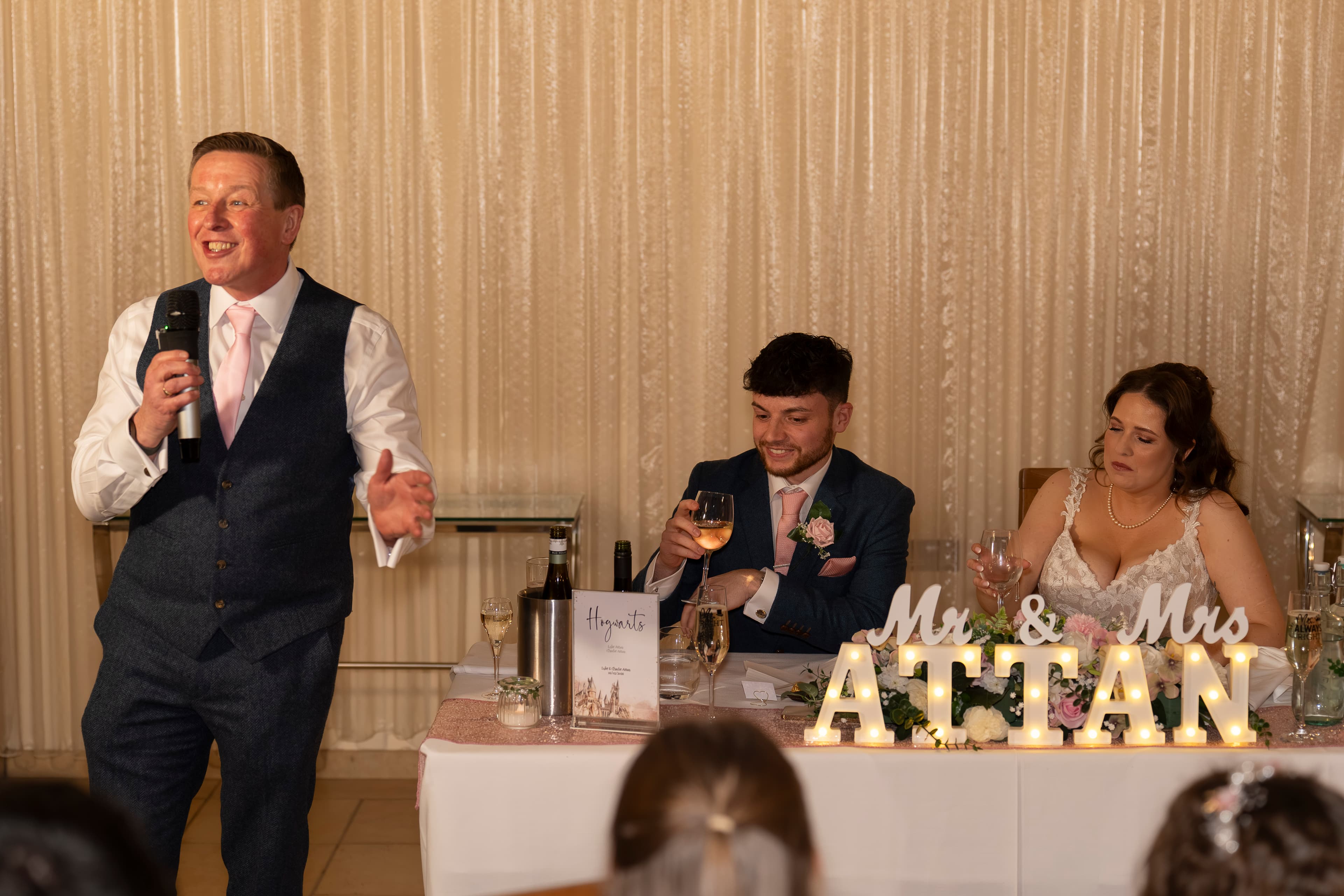
For speeches, a handheld microphone is usually easier to keep close to different speakers than a microphone fixed far away. The person introducing the speeches can remind each speaker how to hold it. If the microphone is repeatedly lowered, passed around mid-sentence or placed on a table, the audience may struggle to hear and the recording will reflect the same problem.
Professional audio capture and multi-camera coverage for key moments are listed in Miftah Photography’s current full-day wedding videography service. Those inclusions describe the published service, but the practical setup still depends on the venue, event format and access agreed for your wedding.
Make personal vows easy to hear without changing how they feel
You do not need to project like a stage performer. Face one another in a comfortable position, keep the microphone where your officiant or sound team has shown you, and speak at a natural pace. A short pause after laughter, applause or an emotional moment helps everyone hear the next line and gives the film a cleaner transition.
Tell the videographer if your vows will be read from cards, repeated line by line, spoken in more than one language or kept as a surprise. There is no need to share private wording. The format and approximate length are enough to plan camera positions and continuous audio coverage. If a translation or reading follows, identify who will deliver it and where they will stand.
Keep a written copy of personal vows with a trusted person and bring a spare. That protects the ceremony if a phone locks, a card is misplaced or the weather makes a screen difficult to use. The written copy is a practical backup for you; it is not a replacement for audible sound on the day.
Give speeches a clear running order
Send the latest list of speakers to your videographer and the person managing the reception. Include planned group speeches, video messages, surprise performers and any change of room. If two people intend to speak together, say whether they will share one microphone or use separate microphones.
A surprise can stay a surprise for the couple while still being disclosed discreetly to the coordinator and videographer. Knowing that an additional speech exists helps the team keep cameras and sound running. The content can remain private; the timing, speaker and location are what matter operationally.
Try not to move speeches at the last minute without telling the photo and video team. If the meal is running late, a simple update from the venue or coordinator is enough. Our wedding photography and videography timeline guide explains why small buffers and clear handovers are more useful than a minute-by-minute production schedule.
Think about the room, not only the equipment
Open doors, loud extraction systems, live music soundchecks and guests talking near a speaker can compete with quiet voices. You do not need a silent room, and the atmosphere is part of the memory. It is still worth choosing a speech position where guests can see and hear, keeping loud background music off and avoiding a busy service route immediately behind the speaker when the venue can accommodate it.
Outdoor ceremonies need an indoor or sheltered sound plan as well as a weather plan. Wind and rain can affect what guests hear, while a sudden move may change access to power, microphones and camera positions. Confirm who will make the weather decision and how suppliers will be told.
Let photography and film share one plan
The photographer, videographer and venue team should agree positions for the ceremony and speeches. That reduces the chance of someone blocking a main camera, standing in front of a microphone or switching off equipment because they do not know what it is. Couples using separate suppliers should introduce them before the wedding and share the same schedule.
If you prefer one coordinated team, Miftah Photography’s Photo + Video service uses one shared plan for photography and film. Either approach can work well when responsibilities and priorities are clear.
Ask about backups, but understand the limits
Important spoken moments should not depend on a single recording point. Ask how your videographer approaches backup sound and what happens if a venue feed is unavailable. A careful professional can prepare alternatives, but no supplier can guarantee control over every venue system, restriction, interruption or last-minute change.
The strongest protection is a combination of preparation and redundancy: clear information, suitable access, more than one practical sound source where appropriate, and cameras that continue recording the moment. Discuss anything unusual before booking or as soon as plans change.
Know which films you will receive
Audio capture and film delivery are related but different. A cinematic highlight may use selected lines from vows and speeches, while full ceremony and speeches films preserve those events in much greater detail. Our guide to highlight, ceremony and speeches films explains how to compare the formats.
Miftah Photography’s published full-day videography page currently lists a short highlight trailer, a 12–15 minute cinematic storytelling film, full ceremony and speeches films with audio, professional audio capture and multi-camera coverage for key moments. Confirm the deliverables in your own proposal and agreement, especially if your ceremony has several parts or speeches will happen in different locations.
A simple sound-planning checklist
Four to eight weeks before the wedding: share the ceremony outline, speech list, venue restrictions and the contact details for the venue, officiant and sound provider.
When the schedule is final: identify where vows, readings and speeches will happen, who supplies each microphone, and who will tell the team about timing changes.
At the rehearsal or venue briefing: confirm standing positions, microphone handling and the backup location for an outdoor ceremony.
On the day: let the coordinator or a trusted member of the wedding party handle updates. Couples should not have to manage suppliers while getting married.
Before anyone speaks: keep background music off, hold the microphone as instructed and pause briefly after applause or laughter.
After a change: tell both photography and video if the room, order or timing moves. One clear message is enough.
What should you send with your enquiry?
You do not need a finished schedule before checking availability. Share your date, venue or general area, the type of ceremony you are planning and whether complete vows and speeches matter to you. Mention multiple ceremonies, languages, rooms or unusual restrictions if you already know about them.
You can also watch the Wedding Films collection to see how real sound and spoken moments contribute to a complete story. When you are ready, Check Your Date for videography, or ask about coordinated Photo + Video coverage. The consultation can then focus on the parts of the day you most want to hear and remember.