For a first dance that works well in photographs and film, agree five things before the wedding: when it will happen, where you will stand, how the room will be lit, which version of the song will play and when guests should join you. Share that plan with the DJ or band, venue coordinator, photographer and videographer. You do not need a complicated routine or a long private performance.
The aim is to make the start clear and give you room to enjoy it. A few practical decisions can prevent the music beginning while someone is still fetching relatives, the camera team is changing rooms or the dance floor is being cleared.
Check that the first dance fits your agreed coverage
Start with the finish time in your photography and film agreement. Do not assume that “full day” means an unlimited evening, or that moving the dance later automatically extends the booking. Tell your team if dinner, speeches or a room turnaround may push the first dance towards the end of coverage.
Allow some breathing room between the planned dance and the agreed finish. Discuss whether you want just the dance, the invitation for guests to join, or some of the party afterwards. These are different moments. Ask what can be covered if the schedule slips, and agree any change before the day rather than relying on an assumption.
The wedding photography and video timeline guide can help you place the dance within the wider evening. Keep one current running order so the venue, musicians and camera team are working from the same version.
Choose a first dance that feels comfortable
You can dance for the whole song, use an agreed shorter edit or ask guests to join after a particular verse or chorus. Choose what you will enjoy. A slow sway, a rehearsed routine and a lively group opening can all have a place; none is required for meaningful photographs or film.
If being watched worries you, decide the guest invitation in advance. “Join us after the first chorus” gives the DJ a useful cue. You can also skip a formal first dance and open the floor together with friends. Tell the camera team what you are planning so they do not wait for a traditional announcement that will never happen.
Practise any planned movement in footwear and clothing that allow you to move comfortably. Share the position and timing of a turn or dip with your team, but do not add a move just because you think a wedding photograph needs one.
Agree lighting before the song starts
Ask the DJ or band and camera team to discuss the lighting during setup. Explain the atmosphere you like, then ask how your faces will be lit while you move. You can keep a warm evening mood without making every lighting decision a surprise.
Questions are more useful than prescribing equipment: will the room lights be dimmed, will coloured lights sweep across your faces, and does the videographer need any continuous light alongside the photographer’s setup? Agree any changes with the venue and suppliers. A quick check before guests gather is easier than interrupting the dance.
Mention planned haze, confetti or other effects in the same conversation and obtain the venue’s agreement. Let the relevant suppliers confirm what is suitable for the room and their equipment. Avoid arranging an undisclosed effect purely for the camera; everyone covering the dance needs to know what is about to happen.
Give both cameras a useful view
Ask where you should begin on the floor. It need not be a precise mark, but it helps if you know which area is clear and where the guests will gather. Leave a usable route from your starting point rather than weaving through chairs, bags or equipment after your names are announced.
Your photographer and filmmaker may need different views of the same moment. Share any choreography or planned movement so they can choose complementary positions. You do not need to face one camera throughout the song or keep turning towards whoever is nearest.
If guests are forming a circle, ask the person making the announcement to leave enough space for you to move and for the team to work at the edge. Once everyone joins, a busier floor can be part of the celebration. The point is to make the opening clear, not keep guests away all evening.
Confirm the exact music and announcement
Give the DJ or band the exact track, artist and version, especially if you have practised to an edit. Agree the starting point, ending point and guest invitation. With a live band, discuss any introduction or change of pace that might affect a rehearsed cue.
Choose one person to check that you, the important guests and both camera operators are ready before the announcement. This might be the venue coordinator or the DJ, depending on how your evening is organised. A simple readiness check avoids several suppliers each assuming somebody else has checked.
Discuss music for your finished wedding film separately from the song played in the room. Do not assume that choosing a reception track means it will appear unchanged in a delivered or publicly shared edit. Ask your wedding videographer how the first dance may be used in your films and which deliverables are included in your agreement.
Plan family participation and surprises thoughtfully
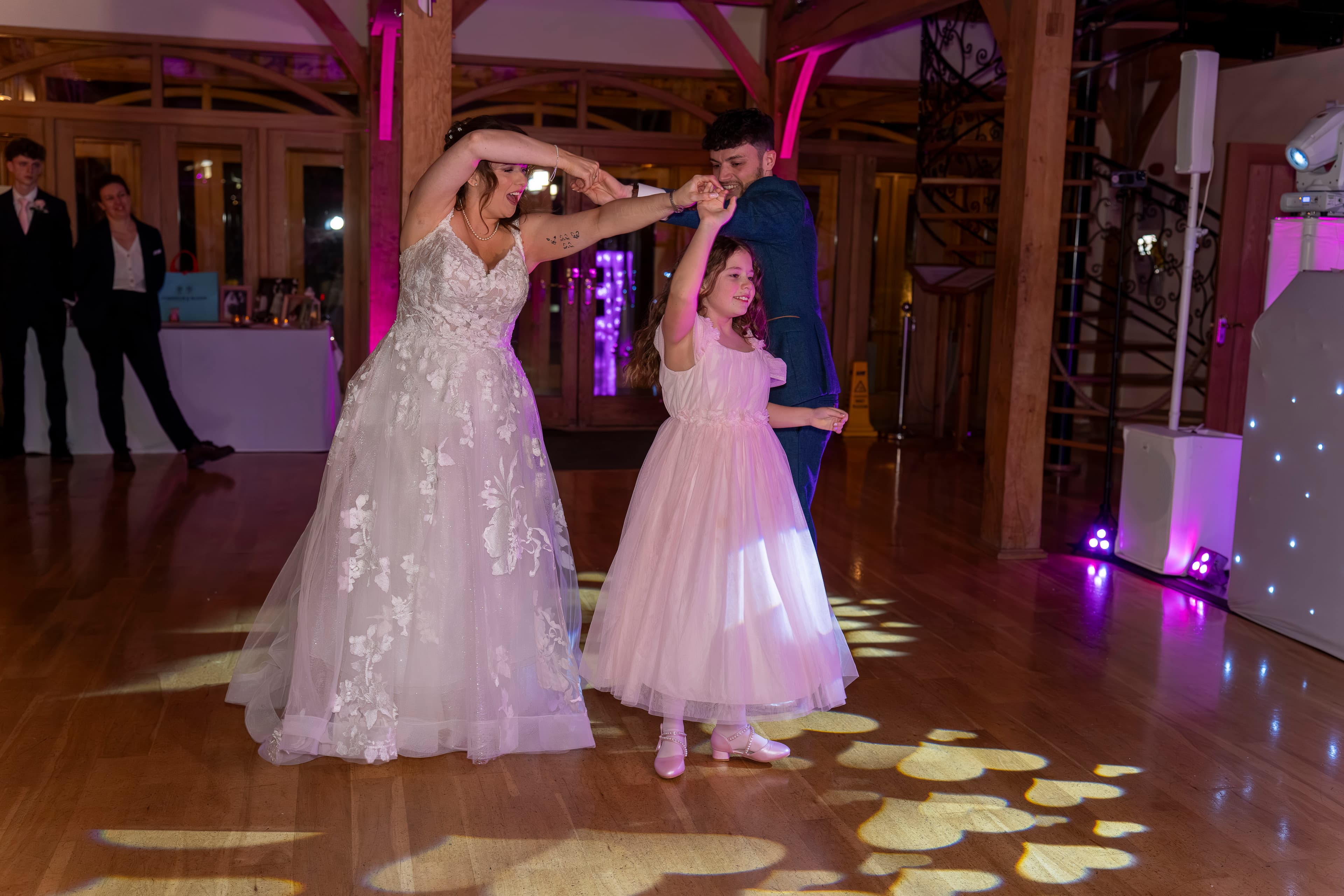
Tell your team if a child, parent or friend will join you at a particular point, or if the first dance will lead into another family dance. A brief private note can preserve the surprise for guests while giving the people filming it time to prepare.
If someone joining you needs a clear route, a chair nearby or extra time, build that into the plan without turning it into a public announcement. You only need to share the practical information relevant to their participation. Avoid asking anyone to repeat an emotional moment because a supplier was not told it was coming.
What if the evening is running late?
Ask the venue coordinator and camera team to review the plan before the first dance becomes overdue. They can explain the options within the time and space available. You might move the dance earlier in the evening, shorten the introduction or agree a revised coverage arrangement where possible.
Do not rush guests onto an uncleared floor or start while equipment is still being positioned just to recover a few minutes. If the dance is your priority, say so when planning the day. If informal party photographs matter more, explain that too; the right compromise depends on what you want to remember.
A short first-dance brief to send your suppliers
Keep the final brief to one message: planned time and room; agreed coverage finish; exact song and version; where you will start; any planned movement; lighting and effects; who checks readiness; who makes the announcement; when guests join; and any family participation. Include the coordinator’s contact so changes can be shared without asking you to manage every handover.
For example, you could write: “We would like a short opening together, then guests invited in at the first chorus. Please check with us and both camera operators before the announcement. There is no choreographed routine or surprise effect.” This is an illustrative brief, not a prescribed schedule or a description of a real wedding.
Keep the first dance part of your celebration
A little preparation should let you think less about cameras during the dance. Once the music begins, concentrate on each other and the people around you. A missed step, a laugh or a child joining sooner than planned can belong to the story without needing to be corrected.
Miftah Photography offers coordinated wedding photography and videography for couples who want both services working to one plan. You can also explore photography on its own or watch the wedding films to understand the approach before enquiring.
Check Your Date and share your venue, expected evening timings and whether you want photographs, film or both. Your proposal can then confirm the coverage that fits your celebration.