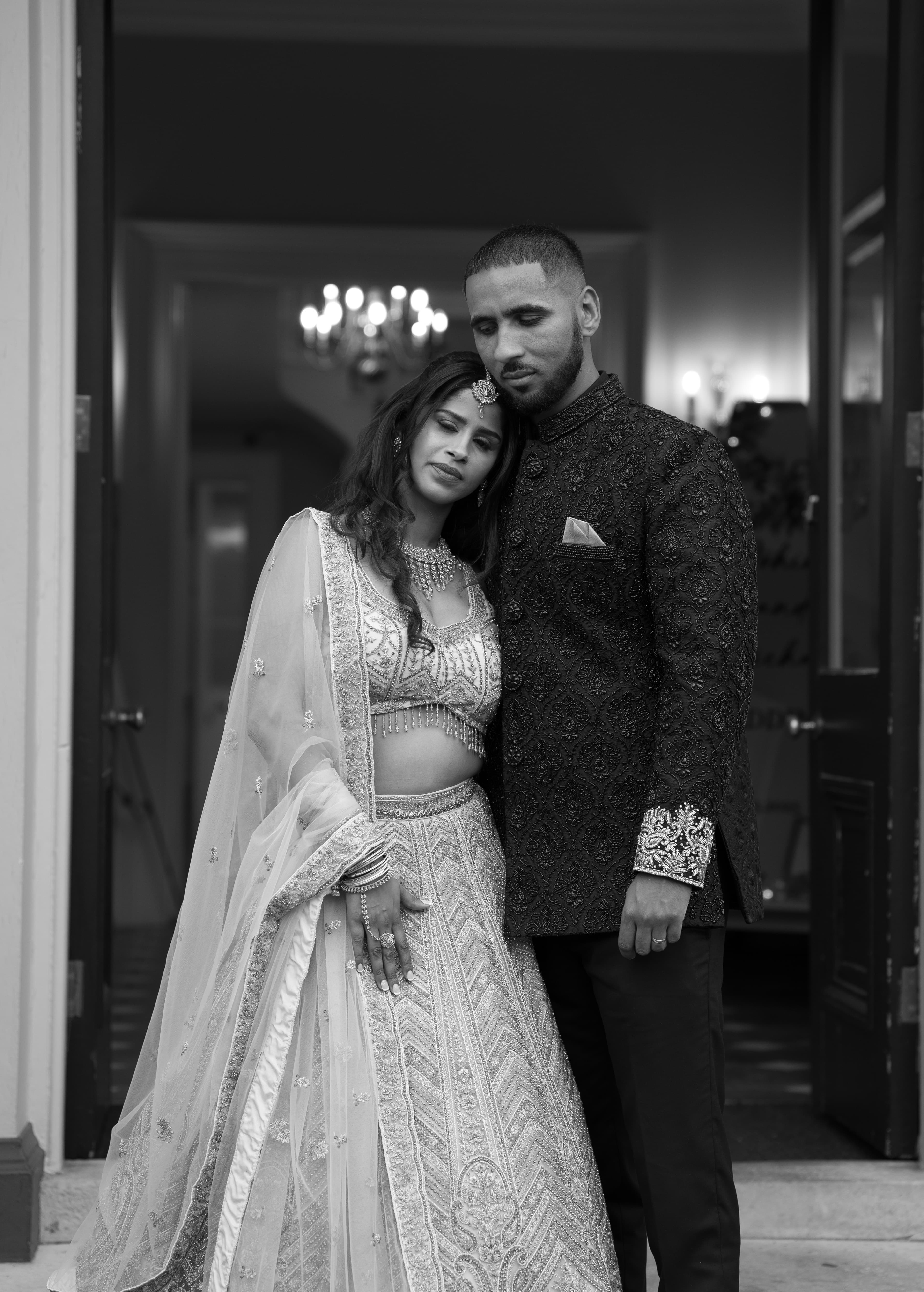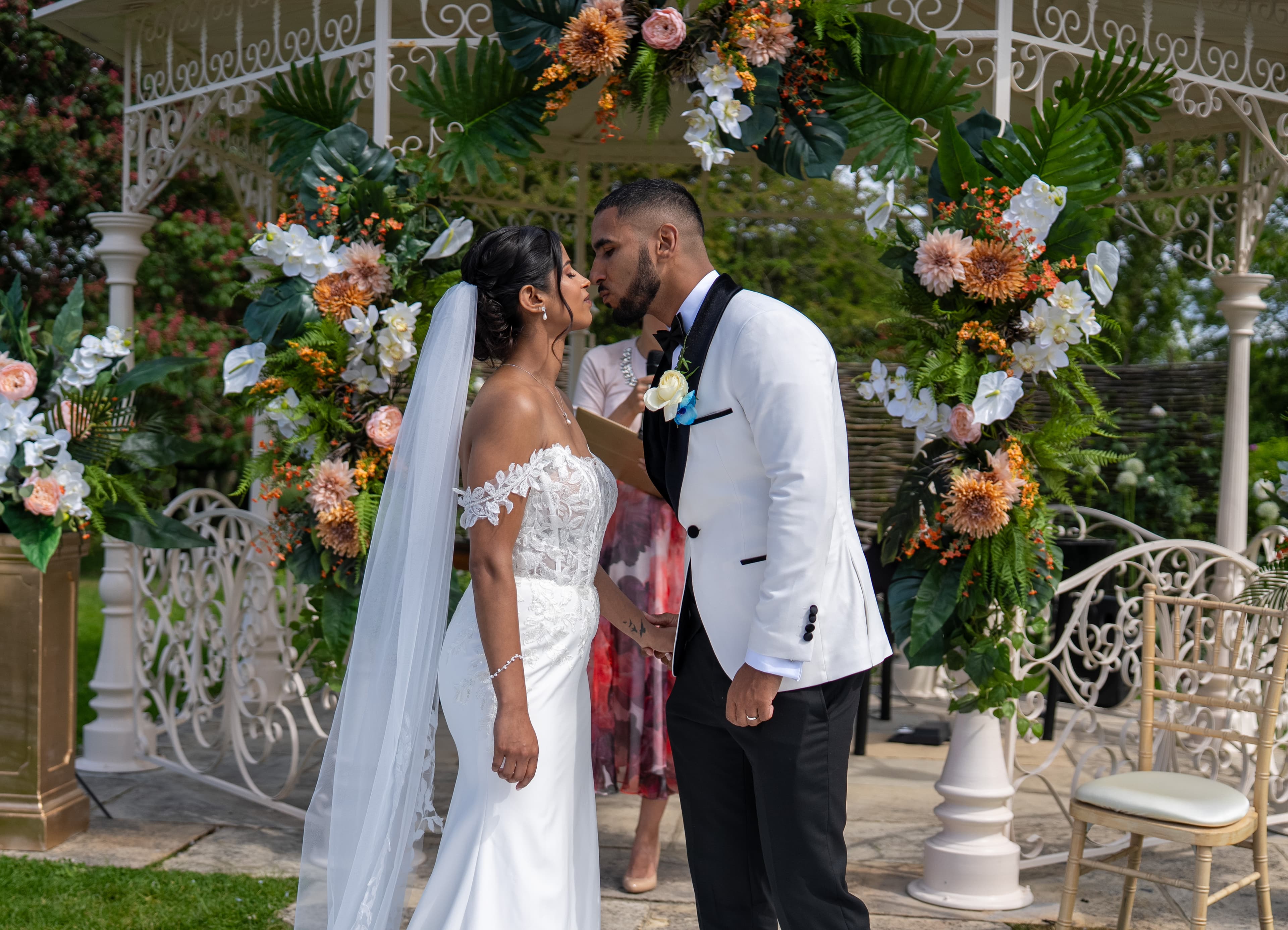
A first look gives you a private meeting before the ceremony and can move some portraits earlier in the day. Keeping the reveal for the aisle preserves that first meeting inside the ceremony, but usually leaves more photography and film work for afterwards. Neither choice is automatically more emotional or more photogenic. The better option is the one that suits how you want the moment to feel and how your real timeline works.
Treat the decision as part of the wedding plan rather than a shot to copy. Consider privacy, travel, daylight, the people you want nearby and whether you would rather share a few quiet minutes or experience the reveal with your guests. Then ask your photographer and videographer to build around that preference without turning it into a performance.
Start with the feeling, not the photographs
A first look is usually quieter. You can speak, pause, hug and take in each other’s outfits before the ceremony begins. That may appeal if a room full of people makes you self-conscious or if you want a moment together before the formal parts of the day. It does not have to include staged reactions, a dramatic tap on the shoulder or a particular pose.
An aisle reveal belongs to the ceremony. The entrance, music, guests and anticipation all become part of the memory. You may prefer not to see each other beforehand for personal, family, cultural or religious reasons. Tell the team what matters to you rather than assuming either option is required for good photographs or a strong wedding film.
Be honest about privacy. A first look is not private if a large wedding party, several phones and multiple suppliers gather around it. Decide who, if anyone, should be present and whether you want the moment photographed, filmed, heard or simply left alone for a minute.
What a first look can change in the timeline
Meeting before the ceremony may create an opportunity for couple portraits and, where practical, some wedding-party or family photographs before guests arrive. That can protect more time for greetings and the reception later. It is most useful when both of you can be ready on time, the location is accessible and the people needed for any group photographs are available.
It does not remove every photograph after the ceremony. Light and weather may improve later, family members may not be present beforehand and you may want a brief portrait session once you are officially married. Think of a first look as a way to distribute the coverage, not as a promise that the rest of the day will run without pauses.
The plan needs a genuine buffer. Hair, make-up, dressing, transport and venue access can all affect the start. If a first look is squeezed immediately before the ceremony, a small delay can turn the quiet moment into a rush. Work backwards from the ceremony and agree what can be shortened or moved if preparations overrun.
The wedding photography and videography timeline guide explains how to build useful breathing space around preparations, travel, groups and portraits. Its timings are examples to adapt, not rules for your wedding.
What keeping the reveal for the aisle can change
If you wait for the ceremony, the morning can remain separate and there is no extra meeting to arrange. The trade-off is that couple portraits, wedding-party photographs and many family combinations usually need space after the ceremony or later in the day. That may be easy during a generous drinks reception, or difficult if travel, greetings and a tightly timed meal all compete for the same window.
Ask when guests can congratulate you, when the venue needs you seated and whether the ceremony location allows a short pause nearby. Choose a concise family list and name helpers who can gather the right people. This protects the social part of the reception instead of asking the camera team to find relatives one by one.
You can still create quiet time together after an aisle reveal. A short walk away from the crowd, a few portraits near the venue or an evening session can give you space to talk without changing the ceremony itself. The important point is to reserve that space in the schedule rather than hoping it appears.
Plan one real moment for both photography and film
Photography needs a clear view of faces, hands and body language. Film also needs movement, the build-up and enough time for the moment to breathe. A coordinated team can choose complementary positions so you are not asked to repeat the reveal for a second camera. Repeating a turn, hug or reaction usually makes the experience feel more directed than it needs to be.
For a first look, choose a place with enough room for both camera positions and a route that does not reveal either of you too early. Check public access, other events, weather cover and whether venue staff need to approve the location. Avoid a busy doorway that suppliers or guests must keep using.
For an aisle reveal, tell the team the entrance route, processional order and any ceremony restrictions. If guests are likely to stand or hold phones into the aisle, the team can plan positions, but they cannot control every sightline. Ask the ceremony lead what movement is permitted so coverage remains respectful and unobtrusive.
If you want private words, a letter or natural sound recorded, discuss that before the day. A videographer may need to plan audio, while you may decide that the conversation should stay entirely private. Both are valid. The wedding videography page shows how real sound and movement contribute to a complete wedding story.
If you feel awkward in front of cameras
A first look can give you time to settle together before the ceremony, but it is not a test of whether you react correctly. An aisle reveal can feel exposed, but you do not need to perform for the guests or camera. Look at each other, take the time the ceremony naturally allows and let the reaction be whatever it is.
Tell the team if you want minimal direction, if close camera positions would make you uncomfortable or if you prefer a little guidance about where to stand. The camera-shy wedding photo and film guide offers a practical way to brief the people covering your day.
A simple way to decide
Choose a first look if private time together matters, both of you can realistically be ready early and moving some portraits before the ceremony would improve the day. Keep the aisle reveal if the ceremony setting is central to the experience, seeing each other beforehand does not feel right or the logistics would turn a private moment into another deadline.
If you are undecided, sketch both versions of the timeline. For each one, mark when preparations finish, travel happens, the ceremony begins, guests congratulate you, family groups are gathered and couple portraits take place. The option with realistic transitions and fewer rushed handovers is often easier to live, not only easier to photograph.
For one shared plan across stills and film, explore combined wedding photography and videography. If photographs are your main priority, the wedding photography page explains the documentary approach and gentle direction available when needed.
Send one clear brief to your team
Share which reveal you have chosen; why it matters; who should be present; whether spoken words should be recorded; any privacy preference; the entrance or meeting location; venue restrictions; and the people needed for photographs before or afterwards. Add the times when rooms, transport and ceremony spaces are genuinely available.
Ask the photographer and videographer to agree positions and a fallback if weather, access or preparations change. Your proposal and written agreement remain the source of truth for the coverage included; this guide is planning advice rather than a promise about a particular shot or reaction.
Plan the reveal around your wedding
If you are choosing between a first look and an aisle reveal, share your date, locations and draft timeline with Miftah Photography. We can discuss how the photography or film coverage you are considering could fit the day without making the reveal feel staged.
Check Your Date to start the conversation. You do not need to make the first-look decision before you enquire.