An unplugged wedding ceremony asks guests to put phones and cameras away so they can be fully present. It can give your photographer and videographer clearer sightlines, but it is not the only way to protect your ceremony coverage. You can make the whole ceremony phone-free, limit the request to the entrance and vows, or allow one quick photograph before asking everyone to lower their devices.
The right approach depends on what matters to you. Some couples want an aisle free of raised screens. Others value immediate family photographs, a relative joining by video call or guests sharing the day in real time. Decide the experience you want first, then communicate a simple request that people can follow without feeling told off.
What an unplugged ceremony actually means
“Unplugged” does not need to mean that every device is banned from the room. It usually means asking guests not to take photographs, record video or post during a defined part of the day. Be specific about that part. “Please put phones away during the ceremony” is clearer than a general sign that leaves people wondering when the request begins and ends.
You can choose one of three practical versions: keep the full ceremony phone-free; keep only the processional, vows and first kiss phone-free; or invite one short guest photo before the ceremony begins and then ask devices to be put away. A clear boundary is easier to remember than a collection of exceptions announced at different moments.
The request should apply to ordinary guest use, not to agreed accessibility needs, an authorised livestream or the professional team you have booked. Tell the ceremony lead and camera team about any planned exception so they know who has permission and where that person will be positioned.
How guest phones can affect wedding photographs
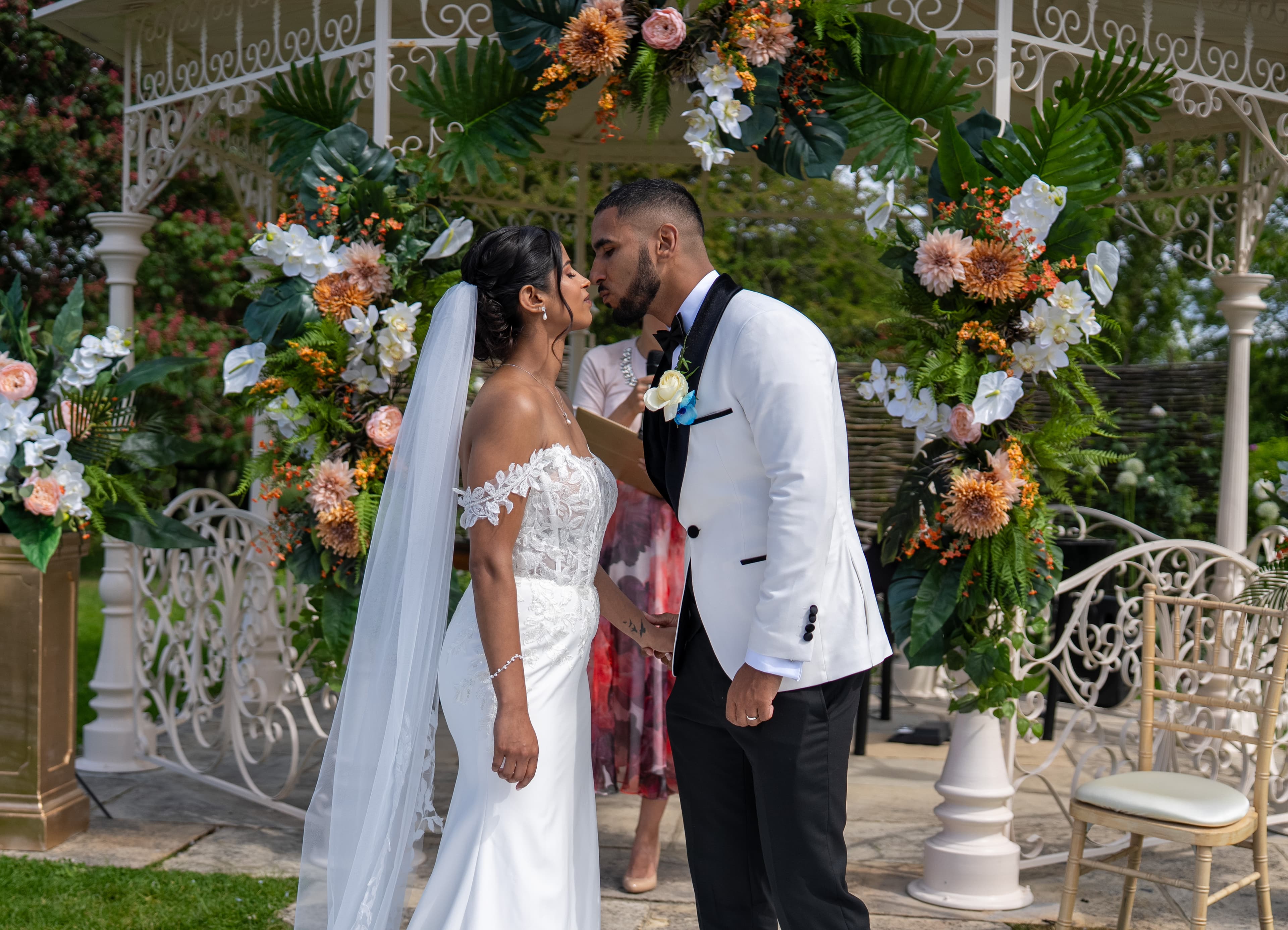
A guest leaning into the aisle can block the view of the entrance, the person waiting at the front or the exchange of rings. A bright screen can also appear prominently in an otherwise quiet frame. This matters most during moments that cannot be repeated naturally, including the processional, reactions, vows and the first kiss.
That does not mean every visible phone ruins a photograph. A few guests taking pictures can be part of an honest record of the room. The difficulty comes when several people step out, hold devices above their heads or follow the couple’s movement instead of staying in their seats. Your photographer can change position where possible, but cannot create a clear aisle after the moment has passed.
If still photographs are your priority, share the entrance route and any restrictions with your wedding photographer. Ask the ceremony lead to protect the aisle and request that guests remain seated. This is more useful than expecting the photographer to move guests while also covering the entrance.
How guest phones can affect wedding film
Film coverage needs more than one isolated frame. A videographer may be following the entrance, reaction, vows and movement across several seconds. A phone raised into the shot can stay there for the whole sequence, and a guest stepping into the aisle can block more than one camera position.
Device sounds can also become part of the ceremony recording. Ringtones, spoken video commentary and notification sounds may be captured alongside vows or readings. Professional microphones help record important voices, but they do not make unrelated noise disappear. A short reminder to silence devices is therefore useful even if you are happy for guests to take photographs from their seats.
If you are planning personal vows, readings or a livestream, brief your wedding videographer before the day. The existing guide to clear vows and speeches explains why the room, sound system and speaker position all matter. Your written proposal remains the source of truth for the film coverage and audio included.
Choose a rule that fits the ceremony
A full unplugged ceremony is the simplest option to explain. It suits couples who want guests to watch rather than record and who prefer the professional photographs and film to cover the key moments. The request can begin when guests enter and end after the recessional.
A partly unplugged ceremony can be a useful compromise. You might ask for phones away during the entrance, vows and first kiss, then allow photographs during the signing or after the ceremony. If you choose this approach, the celebrant, registrar or ceremony lead needs a clear point at which the rule changes.
Another option is a short photo moment before the processional. Once guests are seated, the ceremony lead can invite them to take one picture of the setting or the couple already at the front, then ask them to silence and put devices away. Only use this if it fits the ceremony and does not create a rushed queue of people trying to improve their angle.
Communicate the request without policing your guests
Use two or three consistent reminders rather than covering the venue with instructions. Add a brief line to the wedding website or information sent to guests, place one clear sign at the ceremony entrance, and ask the ceremony lead to make a warm announcement before the processional. The spoken reminder is often the most useful because everyone hears the timing together.
Keep the wording positive and explain the purpose. For example: “We would love you to be fully present with us. Please silence and put away phones and cameras for the ceremony. Our photographer and videographer will capture it, and you are welcome to take photographs afterwards.” Adapt the final sentence if you are not providing professional coverage of every part.
Avoid asking the photographer, videographer or wedding party to confront guests during the ceremony. That pulls attention away from the event and can create a more distracting moment than the phone itself. If the request is important, give responsibility to the person already leading the ceremony or a named usher.
Plan thoughtful exceptions
Some guests may need a phone for translation, hearing support, medical monitoring, caring responsibilities or another accessibility reason. A close relative may be joining through an agreed video call. These are practical needs, not signs that the guest is ignoring your wishes.
Decide exceptions privately and tell the relevant people where they can sit or stand without blocking the aisle. If someone is running an authorised livestream, agree whether they will use a fixed position and whether their device will be silent. The photographer and videographer can then plan around that known position rather than discovering it during the entrance.
Cultural and family expectations also matter. In some celebrations, guest photographs and live sharing are an important part of participation. You do not need to copy a strict unplugged rule if it would feel wrong for your families. Consider protecting only the moments that matter most to you and allowing relaxed sharing later.
What if someone still raises a phone?
Accept that a request reduces distractions; it cannot guarantee that every guest will follow it. Do not let one screen become the focus of your ceremony. Your professional team will use the positions available, and an usher can quietly help only if someone is persistently standing or blocking a route.
Do not schedule a repeat of the entrance, vows or first kiss purely because a guest used a phone. Repeating a real moment can make the ceremony feel staged and may not recreate the same emotion. If a formal photograph is important, arrange it afterwards when everyone understands what is happening.
Ask how professional photographs will be shared only if that is part of your confirmed service and permissions. Avoid promising guests a full gallery or delivery date unless you and the supplier have agreed it. You can simply say that the couple will share selected images when they are ready.
Coordinate one plan for photography and film
When you book both services, send one ceremony brief covering the entrance route, processional order, readings, vows, signing, first kiss, recessional, device policy and any authorised exceptions. One shared plan helps the camera team choose complementary positions and reduces unnecessary movement.
The combined wedding photography and videography service is designed for couples who want one coordinated team. Even with separate suppliers, introduce them before the wedding and share the same ceremony rules with both. A phone policy works best when venue staff, the ceremony lead and camera team all understand it.
If you feel uncomfortable making a public announcement, ask the ceremony lead to deliver it in their own voice. You can also read the camera-shy wedding photo and film guide for ways to reduce the feeling of being watched without giving your guests a long list of rules.
A simple unplugged-ceremony checklist
Before finalising the plan, answer these questions: Which part of the ceremony should be phone-free? Who will make the announcement? Are there accessibility, livestream or family exceptions? Where will any authorised device be positioned? When may guests take photographs again? Who will quietly help if the aisle is blocked? Have the venue, ceremony lead, photographer and videographer received the same information?
Put the final wording and exceptions into the timeline or ceremony notes. Keep it short enough for an usher or celebrant to understand at a glance. On the day, let the ceremony lead handle the reminder and concentrate on getting married.
Plan a ceremony that feels present, not controlled
An unplugged ceremony is useful when it supports the atmosphere you want. It should create space for attention, clear views and natural sound, not turn guests into rule-breakers waiting to be corrected. Choose a proportionate request, make room for genuine needs and give people a clear point when photography can begin again.
If you are deciding how to protect the entrance, vows and first kiss, share your ceremony plan with Miftah Photography. We can discuss how the photography, film or combined coverage you are considering could work around the venue and guest experience without making the ceremony feel staged.
Check Your Date to start the conversation. You do not need to decide on a phone policy before you enquire.